
This post is all about age appropriate chores for kids.
Teaching kids how to help around the house doesn’t have to feel overwhelming or turn into a daily struggle. When children are given tasks that truly match their abilities and age level, chores can become a positive way to build confidence, independence, and responsibility. That’s why focusing on age appropriate chores for kids is so important, especially during the early years.
Rather than expecting perfection, age-appropriate chores help children feel capable and included as part of the family. When tasks are broken down into simple steps and adjusted as kids grow, they’re far more likely to participate willingly. In this guide, we’ll break down chores by age for kids ages 3–8, along with helpful tips to encourage cooperation and make chores feel more fun and less frustrating!
Why Age Appropriate Chores for Kids Are Important
Age appropriate chores for kids do more than just help keep the house running smoothly. In fact, they also play a key role in teaching valuable life skills from an early age. When children are given chores that match their developmental stage, they’re more likely to succeed, which boosts their confidence and motivation.
Additionally, assigning chores by age helps set realistic expectations for both parents and kids. Young children learn best through repetition and hands-on experience, while older kids are ready to take on more responsibility and independence. By adjusting chores as your child grows, you create a routine that feels manageable rather than overwhelming.
Most importantly, age appropriate chores for kids teach children that everyone in the household contributes. Instead of seeing chores as punishment, kids begin to view them as a normal part of daily life, encouraging teamwork, responsibility, and a sense of pride in helping out.
Age Appropriate Chores for 3-Year Olds
At age three, chores should focus on participation rather than results. The goal is to introduce responsibility in a simple, positive way while helping kids feel proud of their efforts. When choosing age appropriate chores for kids at this stage, think short, simple, and hands-on.
Chores 3-year-olds can help with:
- Putting toys back into bins or baskets
- Carrying dirty clothes to the hamper
- Helping wipe up small spills with a cloth
- Putting books back on a shelf
- Helping feed pets with supervision
- Put shoes in the designated spot
- Help place napkins or silverware on the table
- Put stuffed animals back on the bed
- Help unload plastic items from the dishwasher
- Carry non-breakable groceries (like cereal boxes)
When organizing chores by age, it’s important to remember that three-year-olds have short attention spans. For this reason, chores should take just a few minutes and often work best when done alongside an adult.
Tips for getting 3-year-olds to help willingly:
- Turn chores into a game or challenge
- Use clear, simple instructions
- Offer lots of encouragement and praise
- Do the chore together to model expectations
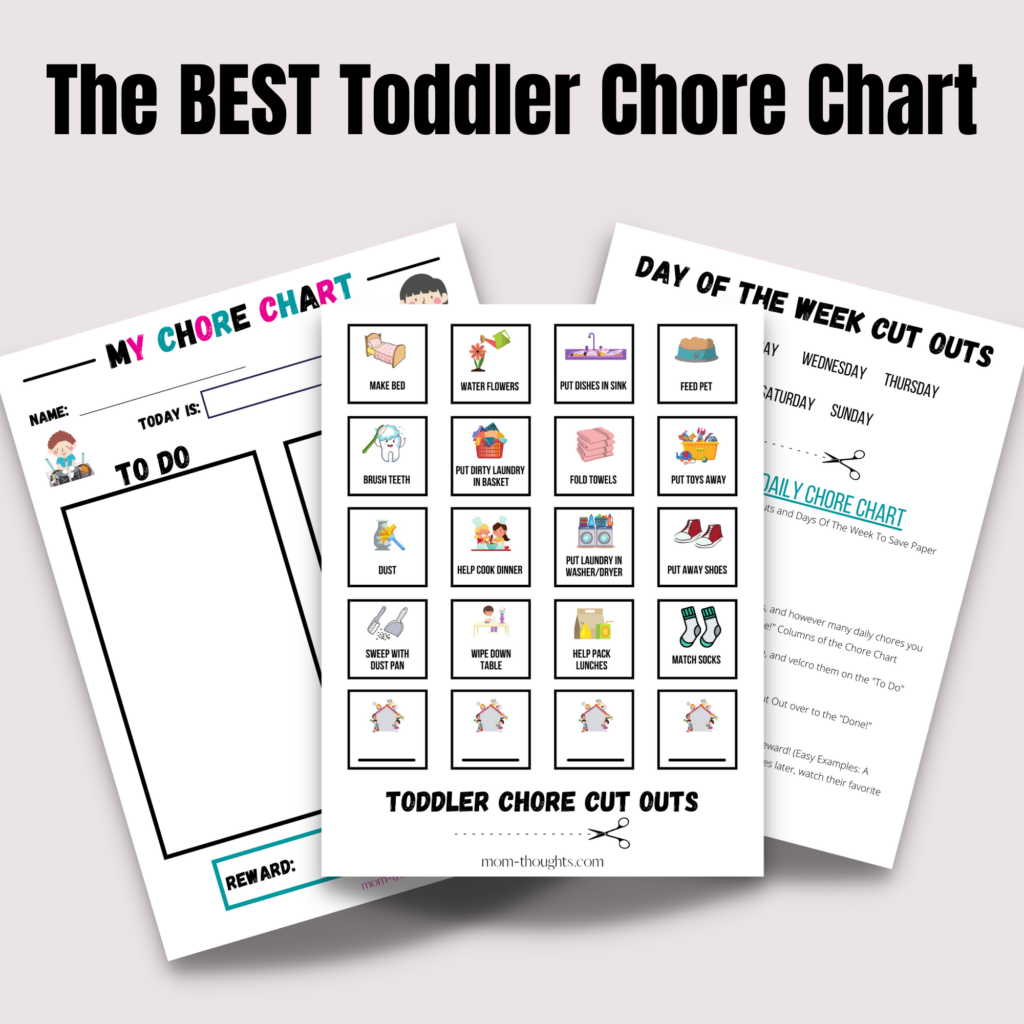
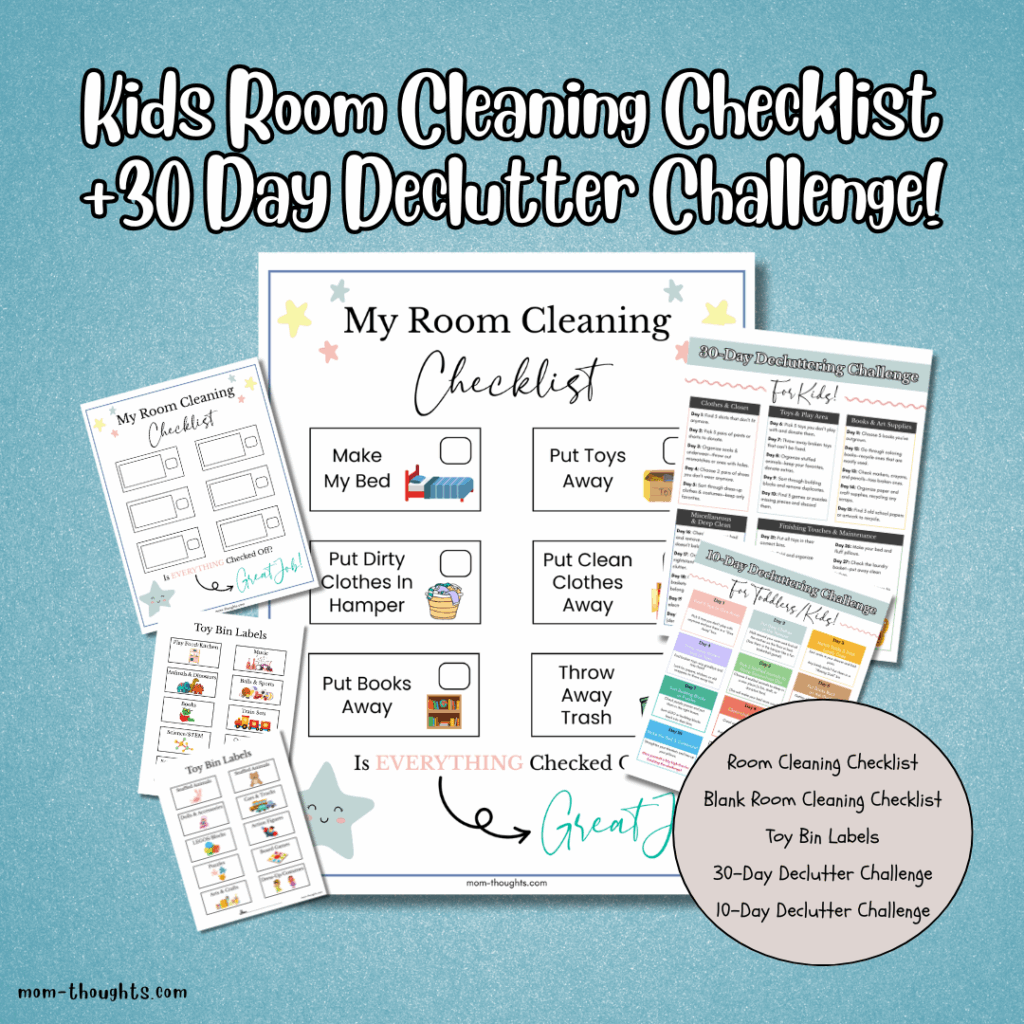
- Introduce an interactive chore chart
Keeping chores light and positive helps three-year-olds see helping as something fun rather than something to avoid.
Age Appropriate Chores for 4 Year-Olds
By age four, children are usually ready for slightly more responsibility and independence. They understand routines better and can follow multi-step directions with guidance. At this stage, age appropriate chores for kids can begin to feel more like real contributions to the household!
Chores 4-year-olds can handle:
- Making their bed (simple version)
- Setting placemats or napkins on the table
- Watering plants
- Matching socks from clean laundry
- Helping clear the table after meals
- Put away shoes and jackets
- Help wipe down tables after meals
- Sort toys by type or color
- Put trash in the bin
- Help pack their backpack or bag
When assigning chores by age for four-year-olds, consistency matters. Repeating the same chores daily or weekly helps kids know what to expect and builds confidence over time.
Tips for getting 4-year-olds to help willingly:
- Give choices between two chores
- Keep expectations clear and consistent
- Praise effort instead of perfection
- Use visual reminders like simple and interactive chore charts
At this age, kids often enjoy feeling “grown up,” so framing chores as an important job can go a long way in encouraging cooperation.
Age-Appropriate Chores for 5-Year-Olds
By age five, many kids are ready to take on more responsibility and can complete tasks with less hands-on help. At this stage, age appropriate chores for kids should still be simple but begin encouraging independence and follow-through.
Chores 5-year-olds can handle:
- Put away folded laundry
- Help load and unload the dishwasher
- Set and clear the table
- Take out small trash bags
- Feed pets independently
- Make their bed with minimal help
- Put toys and games away properly
- Help prepare simple snacks
- Water plants
- Pack their backpack for school
When organizing chores by age, five-year-olds often do best with predictable routines and clearly defined expectations.
Tips for getting 5-year-olds to help willingly:
- Offer choices between chores
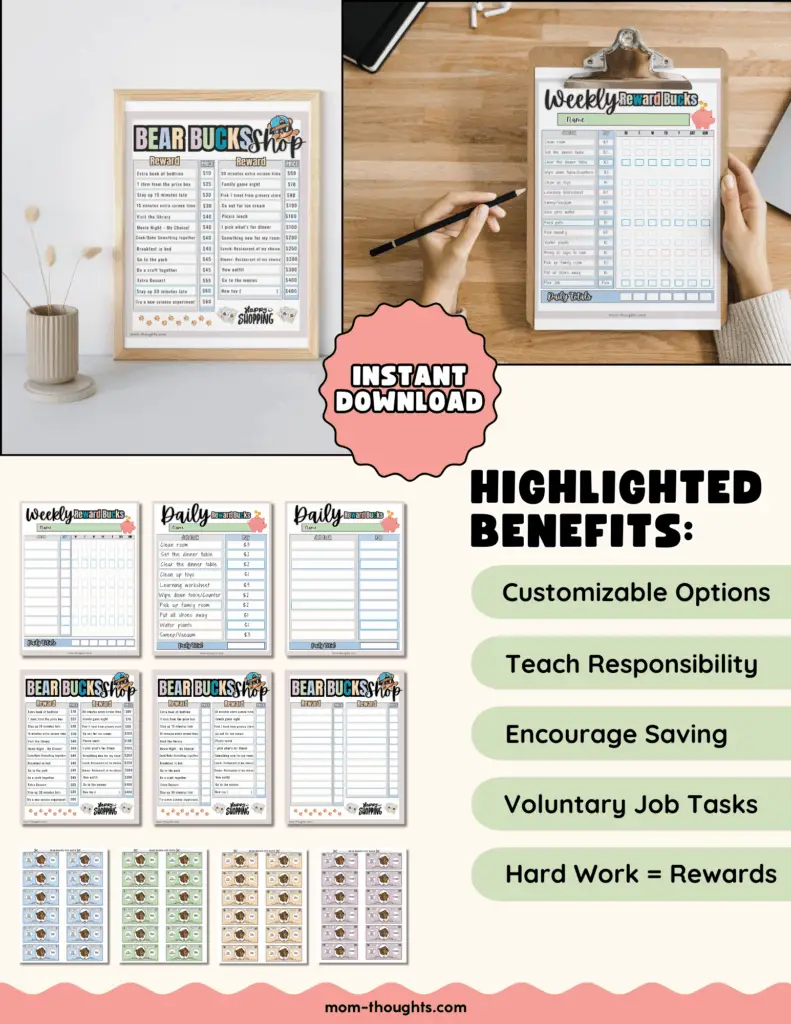
- Use visual chore charts with fun rewards (Check out this Bear Bucks Reward Chart System)
- Keep instructions short and clear
- Focus on effort rather than perfection

Age-Appropriate Chores for 6-Year-Olds
Six-year-olds are typically more confident and capable of handling multi-step tasks. They enjoy feeling helpful and responsible, especially when they know their contribution matters. Choosing age appropriate chores for kids at this age helps build independence and consistency.
Chores 6-year-olds can handle:
- Make their bed independently
- Sweep small areas
- Sort laundry by color
- Help vacuum
- Pack lunches or backpacks
- Clean up after meals
- Wipe down counters
- Put groceries away
- Take care of pet responsibilities
- Keep their room tidy daily
When breaking down chores by age, six-year-olds benefit from clear routines rather than constant reminders. That’s where things like this Bear Bucks Reward Chart comes in handy.
Tips for getting 6-year-olds to help willingly:
- Create a daily or weekly routine
- Explain why the chore matters
- Allow kids to take ownership
- Avoid re-doing chores in front of them
- Utilize an encouraging Rewards Chart
Age-Appropriate Chores for 7-Year-Olds
By age seven, kids are capable of handling more responsibility and can often complete chores independently. Age appropriate chores for kids at this stage should encourage accountability while still offering support when needed.
Chores 7-year-olds can handle:
- Fold and put away laundry
- Help cook simple meals
- Wash dishes or load the dishwasher
- Clean bathrooms with supervision
- Take out trash and recycling
- Vacuum larger areas
- Organize their room
- Help with yard work
- Care for pets daily
- Keep track of personal belongings
When planning chores by age, seven-year-olds thrive when they feel trusted and respected.
Tips for getting 7-year-olds to help willingly:
- Give them ownership of specific chores
- Allow natural consequences when appropriate
- Praise responsibility, not just completion
- Let them problem-solve on their own
Age-Appropriate Chores for 8-Year-Olds
By age eight, kids are ready for more independence and responsibility. At this stage, age appropriate chores for kids can include multi-step tasks and jobs that help the household run smoothly. While supervision is still helpful, many eight-year-olds can complete chores on their own with clear expectations.
Chores 8-year-olds can handle:
- Make their bed daily
- Clean their room independently
- Fold and put away laundry
- Help with full meal prep
- Load and unload the dishwasher
- Take out trash and recycling
- Vacuum and sweep floors
- Clean bathroom surfaces
- Help with yard work
- Care for pets daily
- Prepare simple breakfasts or snacks
When organizing chores by age, eight-year-olds benefit from having regular responsibilities they can take ownership of.
Tips for getting 8-year-olds to help willingly:
- Give clear responsibilities rather than constant reminders
- Allow natural consequences when appropriate
- Show appreciation for their effort
- Gradually increase responsibility over time
- Allow them the opportunity to volunteer for additional tasks to earn extra “rewards” (this Rewards Chart is great for encouraging taking on additional tasks)
How to Get Kids to Do Chores Willingly
Getting kids to help around the house doesn’t have to involve nagging or power struggles. When age appropriate chores for kids are introduced in a positive way, children are more likely to cooperate and take pride in their work.
Helpful strategies include:
- Start small and build up gradually
- Offer choices instead of commands (Use this Rewards Chart to allow your child to choose available tasks to complete)
- Keep expectations consistent
- Focus on teamwork rather than rewards
- Model a positive attitude toward chores
When parents approach chores by age with patience and consistency, chores feel like a normal part of daily life instead of a punishment.
How to Make Chores Fun for Kids
Making chores fun can completely change how kids feel about helping. Especially for younger children, adding a playful element keeps them engaged and motivated while completing age appropriate chores for kids.
Simple ways to make chores more enjoyable:
- Turn chores into games or timed challenges
- Play music while cleaning
- Use simple chore charts or checklists
- Work together as a family
- Celebrate effort and progress, not perfection
- Implement a Rewards System For Completed Tasks (monetary or non-monetary)
When kids enjoy the process, chores by age become something they expect and accept rather than resist.
Common Mistakes to Avoid When Assigning Chores For Kids
Even with the best intentions, it’s easy for chores to turn into a source of frustration. Avoiding these common mistakes can help age appropriate chores for kids feel manageable and positive instead of stressful.
Expecting too much too soon
Giving children chores that don’t match their abilities often leads to frustration for both kids and parents. Following chores by age helps set realistic expectations.
Focusing on perfection
Chores don’t need to be done perfectly to be successful. Correcting every small mistake can discourage kids from wanting to help again.
Turning chores into punishment
When chores are used as consequences, kids may associate helping with negative feelings instead of responsibility.
Inconsistency
Frequently changing expectations or skipping routines makes it harder for kids to know what’s expected of them.
Comparing siblings
Every child develops at a different pace. What works for one child may not work for another, even at the same age.
By keeping expectations realistic and age-appropriate, chores can remain a positive part of family life rather than a daily struggle.
Conclusion
Teaching kids how to help around the house is about more than getting things done. Rather, it’s about building confidence, independence, and responsibility over time. When parents focus on age appropriate chores for kids, children feel capable and proud of their contributions. Using chores by age makes it easier to match tasks to each child’s abilities, setting everyone up for success.
With consistency, patience, and a positive approach, chores can become a normal and meaningful part of daily life. By starting small and allowing responsibilities to grow as your child does, you help create lifelong habits that benefit both your child and your family for years to come.
Printable Products That Every Mom Needs (Instant Download!)







RECENT POSTS

40 Screen Free Activities for Kids That Actually Keep Them Busy
This post is all about screen free activities for kids. SCREEN FREE ACTIVITIES FOR KIDS…

Spring Bucket List Ideas for Kids + Printable Template
This post is all about Spring bucket list ideas for kids. Super Fun Spring Bucket…

45 Fun Easter Basket Ideas For Boys (6-8)
This post is all about Easter basket ideas for boys. Super Fun Easter Basket Ideas…

Fun Springtime Outdoor Activities for Kids To Get Them Outside
This post is all about Springtime outdoor activities for kids. Springtime Activities For Kids –…

10 best Easter Books For Kids That Make Reading Fun
This post is all about the best Easter books for kids. The Absolutely Best Easter…

50 Silly Easter Jokes for Kids That Will Make Them Giggle
This post is all about Easter jokes for kids. Grab The FREE One-Page PDF Printable…

40+ Easter Basket Ideas for Girls Ages 6–8: Easter Basket Fillers
This post is all about Easter basket ideas for girls. Non-Candy Easter Basket Ideas for…

Home Reset Checklist: Reset Your Home in 1 Hour Each Week
This post is all about home reset checklist. The 1 Hour Home Reset Routine For…

5 Best Budget Planners For Single Moms: Take Control
This post is all about the best budget planners for single moms. The Best Budget…

Evening Routine For Moms: 10 Things You Should Do Before Bed
This post is all about evening routine for moms. 10 Things Moms Should Do Before…

25+ Fun Easter Activities for Kids to Do at Home
This post is all about Easter activities for kids. Fun Easter Activities for Kids (Preschool…
Age Appropriate Chores for Kids: What Kids Ages 3–8 Can Do
This post is all about age appropriate chores for kids. Teaching kids how to help…

100 Meaningful Short Mother Daughter Quotes
This post is all about short mother daughter quotes. Short Mother Daughter Quotes That Will…

30 Easy Jokes For Toddlers That They’ll Find Hilarious!
This post is all about easy jokes for toddlers. Easy Jokes For Toddlers To bring…

30 Questions to Ask Kids at Dinner That Spark Real Conversations
This post is all about questions to ask kids at dinner. Questions To Ask Kids…
